
ABOUT THE CENTRE FOR ANIMAL-BASED TOUISM
The Centre for Animal-Based Tourism is the world's first organization dedicated to transforming animal welfare across the global tourism industry.

WHAT WE STAND FOR
The whole orientation of our work.
CAT exists for a single reason: animals used in tourism deserve better, and the knowledge to give it to them already exists. Our job is to move that knowledge into practice.
I. MISSION
To move knowledge into practice for the just treatment of animals in tourism.
— What we do, day to day.
II. VISION
A just global tourism industry that values and respects the wellbeing of animals.
— The world we are working toward.
III. SLOGAN
Change through knowledge.
— The shortest version of all of it.
THE PRINCIPLES
Our Values.
CAT exists for a single reason: animals used in tourism deserve better, and the knowledge to give it to them already exists. Our job is to move that knowledge into practice.
i.
Accountability
ii.
Collaboration
iii.
Justice
iv.
Research Innovation
v.
Respect for Nature
vi.
Stewardship
vii.
Sustainability
viii.
Transparency
ABOUT DAVID A. FENNEL, PhD
The research behind CAT.

DAVID A. FENNELL, PhD
FOUNDER, CENTRE FOR ANIMAL BASED TOURISM
PEER-REVIEWED RESEARCH
BROCK UNIVERSITY
David A. Fennell, PhD. has spent his entire academic career asking questions the tourism industry has been slow to answer. What do we owe the animals that make our experiences possible? How do we measure their suffering? What does justice look like for a species that cannot advocate for itself in the boardrooms and policy chambers where decisions about its fate are made?
He created the animal ethics in tourism sub-field in 2000, at a time when the idea that animals deserved serious ethical consideration in tourism studies was not yet on anyone's agenda. In the 25 years since, he has published more in this domain than any other scholar in the world, building a body of work that now spans animal welfare, ecotourism, tourism ethics, conservation, and the science of suffering.
He is a Professor in the Department of Geography and Tourism Studies at Brock University, Canada, and the founding Editor-in-Chief of the Journal of Ecotourism. He is recognized by ScholarGPS as a Highly Ranked Scholar, Lifetime, placing him in the top 0.05% of scholars worldwide across all disciplines. His books include Ecotourism (6th edition), Tourism Ethics (2nd edition), Tourism and Animal Ethics (2nd edition), Codes of Ethics in Tourism, and Sustainable Tourism: Principles, Contexts, and Practices, among others. He is the editor of the Routledge book series on tourism ethics and two Routledge Handbooks: Tourism and the Environment, and Ecotourism.
He has been the principal force shaping the tourism and animal ethics literature for a quarter century, and is a Fellow of the International Academy for the Study of Tourism, a body representing the top tourism scholars in the world.
https://scholargps.com/scholars/27056179447099/david-a-fennell
Meet Our Team.
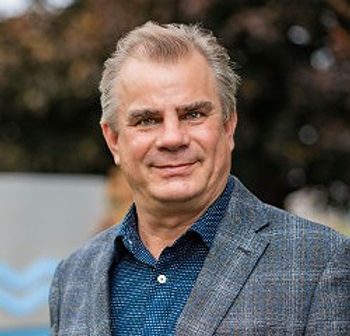
Ian Hamilton is President & CEO of HOPA Ports (Hamilton-Oshawa Port Authority). He assumed this role in 2017, after serving as the Port Authority’s Vice President of Business Development and Real Estate since 2008. Ian has been instrumental in developing working waterfronts in Hamilton, Oshawa, and Niagara by attracting new business and private investment, and creating an integrated marine network across Southern Ontario.
Ian possesses more than 25 years of experience in international transportation and logistics in Europe and North America, and has held progressively senior positions in the liner shipping industry, including Transatlantic Trade Director (Europe) for CP Ships and Business Development Manager for Hapag-Lloyd. Ian holds positions on various boards, including: Chamber of Marine Commerce, Association of Canadian Port Authorities (ACPA), The Hamilton Club, and Brigs Youth Sail Training.
Ian holds an MBA from Aston University (UK) and a BSc in business administration and economics from the College of Charleston, South Carolina.
IAN HAMILTON
DIRECTOR

DAWN PARLIAMENT
STRATEGIC COMMUNICATIONS LEAD, ADMINISTRATION
Dawn brings over 16 years of professional animal training and behavioural experience to the Centre for Animal-based Tourism. Her career began in 1989 working with marine mammals in captive settings, where she gained deep insight into animal learning, cognition, and stress responses. Over time, that firsthand experience led to a critical ethical shift — recognizing the limits of captivity and the long-term impacts it can have on highly sentient animals.
Today, Dawn is a certified positive, fear-free service dog trainer and behaviour specialist, committed to relationship-based, consent-driven training approaches that prioritize animal autonomy and well-being. She strongly aligns with CAT’s evidence-based mission to protect all animals used in tourism--wild and domesticated. In her role supporting social media, communications, and administration, Dawn brings both insider knowledge and moral clarity to advance CAT’s goal of reshaping animal-based tourism toward systems that respect animals, ecosystems & communities.
Sue is an experienced partnership and project leader with a strong track record across the charity, public and social impact sectors. She brings nine years’ frontline experience in animal welfare with the RSPCA, combining enforcement, stakeholder engagement and education to promote higher ethical standards and legal compliance across domestic, agricultural and commercial contexts.
This followed extensive international experience, living and working across multiple countries, which shaped a culturally aware and systems-focused approach, with experience across sectors including agriculture, education, tourism and conservation. This was complemented by work with The Donkey Sanctuary to give further insight into the global context of wildlife and animal welfare issues.
Building on this foundation, Sue has developed a broad management career spanning animal welfare, local government, housing and health. She is a certified PRINCE2 Project Management Practitioner who achieved an honours degree in Languages and Business and diploma in Innovation and Change Management. Sue has led high-value project delivery, building effective partnerships and stakeholder networks to deliver meaningful community impact, and has supported leadership with governance, policy, compliance and risk management. She now brings her wealth of experience and passion to support CAT’s mission to improve the lives of animals in tourism.

DIRECTOR, PARTNERSHIP AND CHARITY MANAGEMENT LEAD
SUE DOBSON, BA
TBA
CAT represents the natural progression of that body of work. Decades of research on animal welfare, ethics, and ecotourism now sits at the foundation of the world's first certification system for animal-based tourism operators, and an education mission reaching tourists, operators, and communities across the globe.
Want the full picture?
Download the CAT Prospectus.
THE FOUR PILLARS
How CAT works.
CAT's work is organized around four interconnected areas, each essential to the mission of transforming animal welfare in tourism.
Pillar i.
Research
CAT generates cutting-edge knowledge on animal welfare, ethics, and ecotourism through targeted research projects, graduate student support, and international scholarly collaboration. New knowledge is only useful if it reaches the people who need it, which is why research at CAT is always connected to practice.
Pillar ii.
Education and Literacy
Most tourists and most operators are unaware of the welfare impacts of animal tourism, not because they do not care, but because the knowledge has never been made accessible to them. CAT develops educational programs, welfare literacy frameworks, and practical tools that change that at every level of the industry.
Pillar iii.
Conservation
Animal welfare and conservation are inseparable. CAT's work addresses the broader ecological context of animal tourism, including biodiversity loss, habitat destruction, and the long-term survival of the species that tourism depends on.
Pillar iv.
Community Ecotourism Development
Transforming how animals are treated in tourism requires transforming the economic realities of the communities that depend on that tourism. CAT works with local operators and communities to develop responsible, sustainable models of ecotourism that protect animals and support the people who care for them.
PARTNERS AND AFFILIATES
A growing global network.
CAT works with operators, researchers, conservation organizations, and institutions across multiple countries and continents. The network is growing as the Justice Pathway gains recognition worldwide. If your organization shares CAT's commitment to animal welfare in tourism, we would like to hear from you.
Affiliates & partner institutions

Partner

Partner
Partner
Partner

Partner

Partner

Partner

Partner

Partner
SUPPORT OUR MISSION
The work continues.
CAT is a not-for-profit. Every dollar supports the research, education, and certification work that raises the bar for animals in tourism worldwide.